
Saturday, December 01, 2012
"The Square" as we used to call it...

Saturday, November 24, 2012
The Veteran Four and Hamblin's Studio

The Veteran Four, Suffolk, Virginia, March 24, 1951.
Anyone remember who they are? Can anyone tell us their story?
The story goes that one day Fred Hamblin of Hamblin Studio in Suffolk happened to be in the Bank and saw my grandfather George Whitley, and said, "George, come on down to the studio and let me take a picture of you, if you died we'd need one for the paper," or something to that effect. Well, they and two other fellows were all best friends and used to hang out downtown in front of the Nansemond Drugstore next door to the American Bank, and so Mr. Hamblin took photos of each and then gave each a tri-folding frame of each of the others. It remained on my grandfather's dresser 'til after his death.
Hamblin Studio as I remember was a very small brick structure, colonial-ish, right next door to Russell's Drug Store on North Main Street in downtown Suffolk. There was a central door and on either side was a window that displayed the lastest portraits taken of various folks in Suffolk over the last few weeks--- brides, babies, anniversary pictures, portraits etc. I used to love to stop by Russell's on the way home from Jefferson Junior High or Suffolk High School, get a coke and check out the windows of Hamblin's to see who was new.
The portrait above of "The Veteran Four" from March 24, 1951 is very much like most of Mr. Hamblin's very professional and "classy" work, utilizing the same sort of backdrops he usually used.
My sister's (Dolly Bell Watson, later Carr) Suffolk High School graduation portrait hung inside the shop for years, at least a copy of it, which Mr. Hamblin enlarged to life size and colored with oils. It is still in the family after all these years. Most of all I remember the smell of the photography shop-- like the heavy pungent smell chemical-egg yolk-sulphur smell of tarnished silver, perhaps from the chemicals he used for developing?
Most of Mr. Hamblin's photos and negatives are gone. Some have been saved and are housed at the Suffolk Public Library in Suffolk, and may be seen online via the Hamblin Studio Photograph Collection at the Virginia State Library.Check it out. You can spend hours checking out the pictures, even one of the 1953 cafeteria of Booker T. Washington High School I think. Lots of High School Class photos also!
Friday, November 16, 2012

This was taken in the back yard of 329 Cedar Street, Suffolk, Virginia about 1957. From left to right, Shelley Burch Watson, Jr.; Claude Clifford Lilly, III, John Henry Marshall, Sammy Powell, and George Hunter Marshall.
We are seated on a fish pool which in my memory was about 100 feet by 100 feet. Seems a little smaller now.
John and George Marshall lived just down the street and Sammy Powell lived behind 329 Cedar on South Main Street.
My cousin Cliff Lilly was visiting with his parents, our Grandparents George and Dolly Whitley at their home at 329. At the time, I was living at 208 Katherine Street. We soon moved to 339 Cedar Street.
When my grandfather died in 1961, I went to live with my grandmother at 329.
Monday, November 12, 2012
St. Andrew's Hospital, Clay Street, Suffolk, VA

St. Andrew's Hospital, north west side of Clay Street, Suffolk, Virginia was a Private Hospital which I know was there in 1913 according to several news stories. My sister, Dolly Bell Watson, later Carr, was born here in 1931. I wonder if it is still there?
—STAFF—
Dr. E. R. Hart,
Chief Surgeon.
Dr. P. G. Parker,
Assistant.
Miss M. B. Lynch, R . N .
Superintendent .
Superintendent .
Miss Rena M. Coffield, R. N.
Surgical Supt.
Thursday, November 08, 2012
The American Bank & Trust Co., Suffolk, Virginia

The American Bank & Trust Co., Suffolk, Virginia
I am guessing this photo by Hamlin's Studio was taken just after the building was built. As you all my age will notice, there is no clock on the corner of the building. Apparently, it was "lost" ("let the reader understand" as it says in the Book of Revelation). The four-sided clock was located on the southwest corner above the mezzanine level. It was affixed to the building and was known as the "city clock.'' The clock was taken down by G. P. Jackson when the building closed in 1993 (Suffok-Nansemond Historical Society, Newsletter (Volume 7, Issue 1, April 1998), 3). It was taken down one other times many years before (I do not remember the reason) and it was stored in the barn behind my grandfather's house for years before being put back up. I hear they have replaced it with a smaller and not too elaborate a version. The Bank began in 1912, and this building was built between 1916 and 1919. For a pretty good history, click the link above for the Historic Register Nomination sheet. My grandfather, George Franklin Whitley, Jr., began as a runner in the Bank and at his death was Vice-President. I was told by him that The Bank was the only Bank in Virginia not to close during at the stock market crash of 1929. He lent money out to everybody in town just by their "good name," and apparently it worked. At least that's the story I was told. On August 29, 1956, an article appeared in the Suffolk News Herald:
"George Whitley Marks 40th Year As a Banker--


Joined American Bank in 1916." [On that
date "Grumps," as his grandchildren called him, was Vice President of the Bank
and a Director of the American Bank and Trust Company since early spring.] "I
quit school when I was fourteen, when my mother passed away. I had, from the
age of five and a half years until I was twelve years old, been tutored by a
Mrs. Judkins of Surry. My birthplace was just within sight of Surry
[Courthouse]. My father sent me to the Smithfield Institute, that lasted just
one session." When he was asked what his least favorite subject was he
answered Latin and Algebra, and with a twinkle in his eye said, "I had a Latin
Book just one day, I gave it back to my teacher, some folks may remember him,
it was John Bohannan. I once told him when I was struggling with Algebra I
didn't see any need to persecute boys with such stuff." But his favorite
subjects were history and geography. Grumps said in the interview that since
the time he had left home he had had only five jobs. Three of those were in
Wakefield where he was raised and where his mother died. The fourth was the
railroad in Suffolk. He said that people probably wondered why a man in his
job could be seen almost daily standing by the railroad. "Well, there is no
sweeter music to my ears than that made by a giant mallett (engine) pulling a
heavy train and I go down to the N. and W. tracks nearly every morning before
going to the bank to watch The Arrow go west or one of the many heavy
freight's that pass through Suffolk early in the morning. Their music to me is
sweeter than any orchestra. Grumps went to work with the railroad in 1907 and
spent nearly ten years with it. I have done everything from the janitor's job
to the resident's since Ernest Jones employed me on August 29, 1916. I had
just quit my job with the Norfolk and Western Railway and was broke. I heard
that a new bank had been organized and went there to get a job. Ernest Jones
asked me if I had any knowledge of banking and I said no. Ernest hired me and
I've been here ever since. The original building was across the street from
this building. The Frank Jones furniture store was located on this site and
next to it was Belden Bell's Bar. There were seven bars in a row in those
days, from Bell's down East Washington Street.I moved the first piece of
furniture from the old banking office to the new. I noticed that the entrance
to the new vault was going to be too narrow for the safe when the men
installed the vault door. I told Ernest Jones, he said, "I don't think it will
be too narrow." Anyhow he measured the vault. He found I was right. He was
about to call a safe mover from Norfolk when I told him I could do the job if
he would get me four 2x12s and two men to help. Ernest said , "I don't think
you can move the safe." I said I was a railroader for ten years and I know I
can. Well, he finally gave in and I moved the safe in a little over two hours.
When asked by the interviewer if he hadn't had some funny experiences in 40
years with the bank, George replied, "No, the only experiences I have had were
work and more work." He was not only the oldest employee in length of service,
but oldest in years at 67. Of the 20 directors of the bank when he started
only Kelly Kendrick was still living."
Tuesday, November 06, 2012
Time Capsule & Brothers of the Brush

United States Post Office, Suffolk, Virginia
Judging from the black car (1957?) in front of the Old Post Office, my guess is that this picture is from about the very time of which I am thinking-- 1958. !958 was the 350th Anniversary of Suffolk. Amont the many, many other memories of that year, I do remember that Ben. C. Traylor, Jr. (SHS Class of 1962) and I went together and "rented space" for 100 years in Time Capsule that was buried with some fanfare, in front of this building in 1958. For years there was an engraved stone in the sidewalk over the spot which said that it would be opened in 100 years. I am not sure sure of the stone is still there. I don't really remember what I put in our envelope, but I am pretty sure there must have been a few old postage stamps as I had just begun collecting stamps, having been given my mother's collection which included her father's collection. I also remember enclosing a note saying that the contents of the envelope were to go to my nearest living relation in 2058!
I have checked all over the internet about this"time capsule" and found absolutely nothing! As a matter of fact, the only mention of the 350th Anniversary was a mention of "The Brothers of the Brush" at A Rotary Club Magazine! Anyone remember those days? A "Decree" went out that all males old enough to grow a beard had to grow one and not save it for the entire Anniversary Year! Were you a "Brother of the Brush?"
Saturday, November 03, 2012
The Remembrances of Shelley Burch Watson of Suffolk, Virginia Recorded at the home of his daughter Dolly Bell Watson Carr 204 South Broad Street Suffolk, Virginia June 9, 1979 by his son The Rev. Shelley Burch (Joel) Watson Jr. "Burch" would have been seventy-two at the time.
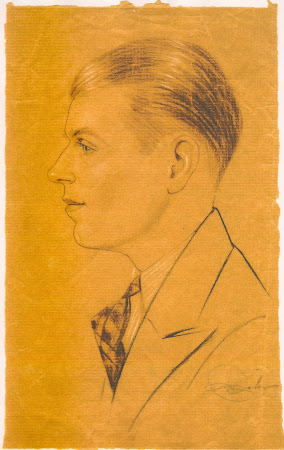 |
.... Oh, that's when I was rooming over there with a Mr. and Mrs. Citizen and Oh, gosh, that'll be in there won't it? (It's just for me.) You better cut it off a minute. I can't...I gotta get myself together again, I had it all in my mind.... (...In one of the letters your wrote me, you told me something about, you mentioned something about when you were little, and I thought "that's the first thing that I ever remember you telling me," and I just never heard you...) Well, you're starting there as a ... there's too many years in there from when I was little... Oh, I wasn't little when... (Oh, that's right, tell me about that and then go back to when you were little) Golly ding! I was trying to get a, some idea of where I went when I left Mrs. Citizen's. Can't think.... 'certainly wasn't there I left here [Suffolk] to go to Canada. I can't remember... and yet it was along that time see, 'cause I was at that time working at Planter's [Nut and Chocolate Company, Suffolk, Virginia]. And I can't remember..., you better let me think about it son, you'd better erase that and let me think about it. (No, because you think better, you think better...) Naw, no, I can't think, I can't think what happened to me when I, what happened in between from there as to where I went. (Well, tell me about living there.) At that place? (Yeah.) Oh, well, there was nothin' to tell there, I was just rooming there... the place was perfectly clean... the room was without a doubt one of the cleanest places I have ever been in. (They were old?) "course it was the elderly people and nobody but just the three of us were there at the time (But how did you find out about it?) I don't remember that. I don't know where I got that information from, all I know is that I went and talked to them and they were glad for me to come there.... Who suggested me going there I don't know and I don't ever remember finding anything like that in the paper you know. (Tell me about Capron... what's the earliest thing you remember?) The earliest thing? Well the earliest thing I remember in there is where I was always playing under the house, with my little wooden trains that I built as I told you I had those little wooden blocks.... you could have a dozen or could have two... You see you make your own little train and you use an empty ah thread spool like your mother would take the thread off, drive a nail in, that was the smoke stack on the engine see, so that's how you could (they're re-selling those for forty-five dollars) well that that was the way the engine looked, you had to have then the caboose, then the other shorter piece to make build up like a caboose, then the other little cars in between which you could have any number as long as the string didn't break, you use little strings for couplin' and the sand was so dry that you could just run anywhere you want all the way under the house anywhere, you know, and it would follow right, it would stay always in the track, it was no pullin' off because it cut such a groove it would stay in there, you see. But that was one of my, one of the big things that even on a rainy day you could play there at that. Then we used to ah, the other kids around, ah, we'd go, what you call hoop-rollin' you know. Just imagine the old type of ah, tricycle they used to have... it didn't have rubber tires on it, it had a steel ring you know, well you pull all those out then you get yourself a good stick and you could run for yard after yard with a think like that ya know. Just playin', racin' with it and things like that. And then we used to have ah, another game we used to play... was takin', take an old can of some sort, it didn't matter what kind it was, we had a little wooden club there with a long wooden handle on it with a "T" at the bottom and you'd be knockin' that around and I've often thought about that... I don't know how old this golf game is in this country, but we were doin' the same thing, but we were doin' it with a tin can because we didn't have anything else to do it with. 's silly waddn't it? Well, that's the things kids had to do... Ah then, we used to have, ah, we had a big swing on the porch. That had like a little trestle in the bottom... of course, kids-like, you know, we wouldn't be satisfied sittin' in it like grown folks just swinging back and forth... we had to pull one... it had two seats in it. We'd pull one way as high as we could get it, take the trestle out of the bottom and use the other one really for a swing. So kids, kids along that time of [?], we didn't have that many things to do, but we had enough to entertain us, to keep us out of trouble you know. Of course you didn't think about trouble or anything like that in those times. And then that went on. And then we had, had this goat-- billy goat with a little wagon. And it would carry two people in it. We'd hook that up nearly every day and go for a ride somewhere. (Did it have a name?) No. Not... I don't remember any name. But all I remember was a billy goat. And I can remember that... do severely...the back end! I mean you... one of the biggest goats I ever say. And had the longest horns you ever saw. But he could pull that thing. When he was pulling.... I mean he never got tired, he just kept right on running. He'd ride all 'round Capron. 'Course Capron wasn't very big you know. Ah, we'd ride down the whole length of "The Main Street" I call it, and back again. And then, which right to this day, there's some of the old... I call 'em shanty houses, are still built there. They're still standing to this day! (I'll be darn.) Yeah they are! And you can hardly believe that people ever lived in 'em, but they did. And then, ah, across the street from us lived Mr. and Mrs. John Vincent. That was, I think I showed you that house one time, how it always reminds me of the Phantom of the Opera, that old place you know. On Sunday of course we went to the Methodist Church. But it was like I said, I can't remember being a Methodist whatever that, I can be sure in my mind that the ah, the ah baptismal pool was there because we went up the back window to get into it! And I can't be sure whether it was the Baptist or the Methodist Church. But we went to the Methodist Church. I was a Methodist. (Who used to do that?) (Who did you play with?) Well, 'twas just kids my age. I can't think of all their names. In fact, I can't think of the Rollings's. The Rollingses and the Reesees were about the biggest. They used to run a big grocery store there you know. And you'd go down there. But I can't remember any of the names of the children. That's too far back for me you know. Because they didn't mean much. A, the goat was more important. And the little deer that used to run around in the house. That was important see. But the names of the children didn't mean that much. But when we were seven was when ah, my Daddy moved to Suffolk. He was with the Truitt, The G. W. Truitt Lumber Company there. And ah, he came to Suffolk. Truitt was still.... That's where Truitt's plant was, here in Suffolk. And ah, that was... At that time everything had to be hauled on the railroad, in boxcars. And I of course, being a young'un-like, everybody was down there at the station to see the stuff being hauled and put into the boxcars to bring that to Suffolk. That was a big deal you know-- movin' away in a train...those days.... And then when I used to..., after we came here to the city, I was I believe seven years old. And I went to the George Mason School. And I believe Erma Hurff, which I think she may still be living today.... Did you remember her? (Yeah, I remember.) Well I think she is (She was old when I was....) Yeah, that's right. And I went to George Mason School. And ah, 'course I always liked her. To me she was a good teacher. I learned from her. (What grade was that?) Ah, can't remember the...if that was the first grade or the second grade. Seems to me it was the second grade, but I can't pick that first grade you know. It's kinds hard to get 'em. (I get confused first, second and third grade.) Yeah, when you think about it. Of course, and then as the years went on we.... I may have []m when, I think there came a time that when you got up to a certain grade you could go over to the, what's now the Old Suffolk High School you know, Thomas Jefferson School it was then. Daddy went to see John E. Martin which was at that time the Superintendent, and asked him about gettin' me and one of my other brothers, I think 'twas Otto, transferred over to that school. I don't know what the particular reason was but 'twas something anyway, and John E. Martin says "Well O.K." so that's how we got over there to that school. And then we...living on Pinner Street at that time. Seems to me the number was three hundred and nine Pinner Street. And it was right across the street from old John, John B. Pinner. He was the peanut man and his son John F. Pinner built a house, built his home right down on the corner which is still standing today-- the corner of Finney Avenue and Pinner Street. And ah, I used to play with Dick Hume. (Hume?) Dick Hume. Richard Hume his name was. H-U-M-E, uh-huh. Edward Everett , Jack Pinner. And Jack Pinner down there... that was...he and Edward Everett, they were somethin'. They had ponies and we didn't have any! (Where did they keep them?) I don't know. They kept them somewhere around there. I don't know just where they kept them. But they rode 'em every day. (They kept them in town?) Right! Sure did! Pinner Street didn't always have that roadway like you see it now. It sure didn't! I'll tell you now crude it was. Ah, this is long before your time.... The water wagon used to come down Pinner Street and ah, a great big water tank you see. And it had like a cup on either side. And the whole spout was shooting down just like it hit into a saucer and that threw the water as you do it like today with a water spigot. They watered the street to keep the dust down (It was dirt?) It was a dirt road! (I'll be damned!) Yes sir! It shore was! (Pinner Street?!) That's a long time ago id'n't it? And, and that how we could ride out there on those horses, so, I had... I guess I rode Edward Everett's horse, pony, and Jack Pinner's almost as much as they did. Because they were the kids I was playing with you see. And of course my older brothers, they had playmates of their own. They were too old for me. You know how the older ones are-- "You stay home!" See. So. I don't know where they went. I think most of the time they spent was down there around the Kingsborough bridge, what they used to call "Chicken Hill." Well, you had to be ah, tough... (What? Around the "hill?") Huh? (Around at the bridge?) Uh-huh, on this side, this side of the bridge, like you're going to Norfolk? (Yeah.) Well from Central Avenue to the bridge was called "Chicken Hill" (I didn't know that), and they were tough. Everything, they were in there was really tough. (I didn't know that). Yeah. They were the fellows they would play with. I can remember some of the names: Thornton Early was one, ah, Willard Matthews-- he lives right there close to the bridge...ah, Steven Wilkins, and he was just as tough as goard guts...he really was, and he lives right there...ah, behind, in the first house behind which today is...a grocery was a grocery store run by Almond [Allmond?]. A fellow named Almond. And he lived in that house. (Ben Traylor's store? Or right at the bridge?) Well, no, no. I think Traylor used to run that store or still runs it or something. (So that's the store then?) That's the, that's, that's the original store that was there when I was a little boy. (I'll be darn). Uh huh, and Steven Wilkins lived in the first house and then these other fellows, ah, 'course I didn't,...Edward Everett and, ah, Jack Pinner and myself...we didn't venture, hah, and Sam Brockenborough, you remember that name? (I know the name). Well he lives right there on the corner of ah, Grace Street and Pinner Street in a house that, ah, ah, I think the man that used to run a furniture business bought that house that...I can't think of what her name is right now, but I'll think of it pres'n'ly. And ah...that...we bunch of boys...stayed like down our end of the street and because if you went down to "Chicken Hill" you were just libel like to wind-up in a fight over there. Ah, and 'specially if you cross, if Chicken Hill gang, I don't know who the gang was on the other side, this is all could...you could find about in the city, but "Chicken Hill" if they got mad enough, they'd cross the bridge and go over and fight with the guys on the Kingsboro side [We all lived in Kingsboro from about 1949 until about 1954, at 208 Katherine Street]. Yeah; yes Sir, I’ve seen many-a-one pop, ah, after they've been in a fight and hit in the side of the head with a rock you know. But there was some of the beginnings of the, ah, most of my childhood days, the other time I spent of course going to school, trying to learn some common sense, and ah, I don't think I've left anything out son, (You're talking about ah, selling newspapers). Oh, during the, during the time I was living on Pinner Street, at 309, which I think today, I believe it was turned into a two-family apartment or something, and I believe that old house is still standing there. (It was one family then?) Huh? Un huh. My Daddy rented the whole house and he rented this house from ah, what was called her? Her name was Caddie Riddick, whe owned right much property. (Callie Riddick?) Caddie Riddick. She was a relative of a...of a...Beverley Holiday [Daddy's doctor]. She owned that house, you see...at the time...see when we lived there...that's when my mother was taken so ill, you see, and ah, during that time...I'm having lots to remember there...during that time was when one night they thought she was dead, and they woke everybody up in the house, and, and ah, so I got up, and we went into the bedroom [the mantle clock strikes four times. Dolly still has that clock. It was Seth Thomas that was always on the mantle at Nanny and Grump's house on Cedar Street], and had a dress, I think they call it a shroud or somethin' in those days, that they were gonna put on her, and she opened her eyes and asked us,"What are you all doin'?" You see... that was kinda hard you know. I heard that. (You heard her say it?) I heard her say that thing, and, and it, it scared me too you see. See, they're things that ah, you carry in here [pointing to his heart] all your life. But however, she got better, and then, ah, I think, ah, that, that, ah, I... I think it was maybe one or two days later, that's when she really died. But going back to the otther part of those days, ah, before all this took place, is when, oh, Daddy went to Emporia to see the old Dr. Wood about her. You see, and ah, he said, well the thing to do is to try to get her to Emporia and he would try, he would look after her. I don't believe he was practicing medicine at the time. But he would look after her as long as he could and as long as she was staying in Emporia, see, and he did that. And in the meantime, I figured, well, I might as well do somethin' and so ah, my ah, Mrs. Gray [a cousin?] She, her boy had change, he was carrying papers for "Th' Virginian Pilot," he'd pick 'em up off the Southern train in the mornin' and carry the papers, Well, so, he gave me that job. He just gave it up. And I carried, so I carried "The Virginian Pilot." [Here in Suffolk?] No, in Emporia. I never carried papers in Suffolk. [She was a cousin?]. Humm? [Your cousin?] My cousin? [Yeah.] Yeah, yeah. [Mrs. Gray?] She was my cousin, my Aunt. And it was, he was my cousin, and he was the one that used to carry the papers. [What was his name?] Huh? [Do you remember his name?] Ah, I believe it eas William. It was. William. Sure was. And he jus', of course he was gettin' kinda big, and he didn't bother with it any more and so I just took it from there. And I had a little wagon... it... I would meet the train every day and get those papers and an, 'course she was billed for 'em you see, but I'd get 'em because she knew exactly how many customers I had, and I had a wagon, a four wheel wagon, I had so many papers it was impossible to carry 'em under your arm. You just couldn't do that and I had to tie 'em doen and as I went along you know, just throw 'em up on the porches for the people, so the paper delivery is just about the same thing that it is today, you still throw 'em up on the porch. Except I had one customer that would never pay, I could never get 'em and he and his Daddy both died still owing me for "The Virginian Pilot!" Seems kinda strange duddn't it, but that's the truth. [Funny thing, like that.] Yeah, And I can tell you what their names are. Their names were Ayers. E. W. Ayers and Son. They were candy makers in Emporia. And they were good ones! They made some beautiful candy. I used to go up there, but I could't get my money, you see for my paper. SO I just stopped carrin' the paper; to them; 'cause I could never collect anything, see, and I found out that they, my aunt was paying for the paper and they were doin' the reading. So I just stopped delivering the paper. But however it was not too long they moved to Suffolk, up here on Washington Stree., and opened up a little candy shop up there. And then, maybe I shouldn't 'ave even mentioned the papers because they were mighty good to me, years later, I'll never forget 'em for this, ah, They also had an ice cream place. They used to make ice cream right there the corner of ... Pine and Washington Street and I was at that time clerkin' at the A&P store... you know, those same men... It may sound jumpy around to you but I have to fit it in, like that to follow the same, thing, ah, some people they, they used to make this ice cream and I was working' at the A&P from four o'clock in the afternoon an, 'til six-thirty and all day Saturdays. And they'd make ice cream maybe twice a week. And ah, I don't ah, I've often thought it, and ah, because they would make their ice cream, they would come over and knock on the door and tell me to 'come on over and bring a grea-a-a-t big tray and I'd take the biggest tray that I could find which would hold five pounds of lard and go over there and fill it up...(for free?) with ice cream, Yeah, 'course when they make the ice cream they've gotta wash 'em out anyhow, so they'd give you a great big scoop and you could fill 'em up or take as much as you want, so I, I was paid far more in ice cream, for me and the manager of the store. 'was named Mickey May, and as, we used to sit and eat ice cream 'til you couldn't hardly stand up... over in the A&P store. And, and down I think it was, one, next door or two doors down, was a DP store there, you know, David Pender? (down from the A&P or?) Yeah, from the A&P, you see. See, he had his ice cream place back there, then the A&P was there, then ah, ah, you see, it seems to me there was a, it seems to me there was a, it seems to me Walter Hosier had some kinda insurance business in a little cuddyhole in between the A&P and the DP store. (And this was on Saratoga?) Huh? no, this is on a, that's when the two doors, ah, two doors and that little cuddyhole from Pine Street, you see, and, and, I've often, often thought of it how names really get around to it and how this thing came about. And I've sat here in this room, and thought about it a lotta times-- how strange things work! Well, anyway... Oh, I worked, ah, there until Mickey May decided one day he had, he just had to be off. And he told the manager that he wanted to be off that particular day, and this, not the manager, the assistant, ah, whaddya, assistant to the ' he was, and he blew a fuse, he didn't want him to be off. He said, 'Well,' and his name was Flowers, he said, 'Mr. Flowers I'm gon' [pronounced with a long "O"] be off, like I said,' he said, "you can come down here, do anything you like.' He says 'I'm gonna give Burch the keys; he's gonna open that store and when you come he can give you the keys.' He said "If you wanna kick me out you can do that too.' And Mickey didn't come that mornin'. He gave me the keys the night before. Sure enough the next day down comes the big shot you know. And he hit the ceiling. I said, 'Well Mr. Flowers all I can tell you is I heard him tell you that he wasn't gonna be here, that he was gonna give me the keys' and I said 'Here they are.' So I gave him back the keys. Then they brought another fellow there named Tom Jobe, J-O-B-E, and he worked quite a while; but he wasn't the same type of man that was working for, So, ah, and I didn't stay much longer. Let's see, how long did I stay after that? Oh, I worked then on until,... as I said while I was working there, I was livin' with my older sister, which ah, and I did the best I could, I was trying to go to school and trying to earn....[here the tape ended and the conversation between the two tapes was lost]. "Is it on now? (Yeah.) Well, how do you know where I stopped? (you were talking about ah,) I mean how do you know where it is? (Well that was just the end of the tape, so I put it on the other side of the tape.) Oh, [he laughs], If I kept on talking after the end of the tape there's bound to be somethin' missin'--- that'd be be like Nixon's tape. [No Daddy, this tape is far more valuable to me than Nixon's tape, and I am sorry that his name even is to be found in this manuscript.] (You were talking about leaving the keys and then Tom... you started out with a man named Jobe) Yeah, along, yeah, Tom Jobe came there. But ah, in the meantime, ah, I was at that time had gotten into the tenth grade, and I could ah, ah, I was doin' the best I could... just bein' a boy. I was at that time just seventeen then, so I worked there, with them until my sister told me that she just, I'd just have to stop school and get somethin' to do 'cause she couldn't take care of me...[Daddy quavered here] you know. And, 'course, I was hurt, but ... I had... there was nothin' I could do about that, you see. So, ah, that's when I went down to see Mr. Obici [Amadeo Obici, the founder of Planter's Peanut and Chocolate Co.]. I didn't have any, I had a penny, that's all the money I had left, and ah, I went to see him and got the job with ah, ah, Planter's, which he personally told ah, Frank Patrick, the Superintendent of Planter's then, that to see that I had a job to do and he was--- and I went and did that for him. And however, 'course there's a lot in there, a million things that's in between, I can think of all of 'em it would take more than one tape (well, I've got some more tape) to tell it all to you, but I'll try to get as much of it all in there as I can, so--- in the time that I went there I felt like, well I'm gonna work hard, he put me, he put me in the print shop which was run by a Frank Krize, he was a German (how do you spell that?) K-R-I-Z-E, (Oh!), Frank Krize (I've heard of him) I know you have. And he was ____ good to me and he saw that I was trying and it didn't make any difference to me...
Edward Everett was the husband of "Miss" Dolly and Shelley's piano teacher Gillette Everett. When we first began taking lessons, she was "Miss White." Her, and later their, home was directly across the street from the First Baptist Church. It was later bought by that church and torn down to make a parking lot. Jack Pinner's son Johnny Pinner and Shelley were friends when they were very young. They too went to George Mason School.
Wednesday, January 20, 2010
The Ash Grove by John Oxenford
I remember learning this in elementary school, George Mason School, in Suffolk back in the early 1950s. It was even as a child a haunting tune and is apparently an old Welsh Song with similiar words. The one I learned was this one, which I have sung deep inside for decades now. I think of Cedar Hill and all the little cemeteries around what was once the old Suffolk...
The Ash Grove by John Oxenford
The ash grove, how graceful, how plainly 'tis speaking,
The wind [harp] through it playing has language for me.
Whenever the light through its branches is breaking
A host of kind faces is gazing on me.
The friends of my childhood again are before me,
Each step wakes a memory as freely I roam.
With soft whispers laden its leaves rustle o'er me,
The ash grove, the ash grove again [alone] is my home.
My laughter is over, my step loses lightness,
Old countryside measures steal soft on my ear;
I only remember the past and its brightness,
The dear ones I mourn [long] for again gather here.
From out of the shadows their loving looks greet me
And wistfully searching the leafy green dome,
I find other faces fond bending to greet me,
The ash grove, the ash grove alone is my home.
My lips smile no more, my heart loses its lightness
No dream of my future my spirit can cheer;
I only can brood on the past and its brightness,
The dead I have mourned are again living here.
From ev'ry dark nook they press forward to meet me;
I lift up my eyes to the broad leafy dome,
And others are there looking downward to greet me;
The ash grove, the ash grove alone is my home.
The Ash Grove by John Oxenford
The ash grove, how graceful, how plainly 'tis speaking,
The wind [harp] through it playing has language for me.
Whenever the light through its branches is breaking
A host of kind faces is gazing on me.
The friends of my childhood again are before me,
Each step wakes a memory as freely I roam.
With soft whispers laden its leaves rustle o'er me,
The ash grove, the ash grove again [alone] is my home.
My laughter is over, my step loses lightness,
Old countryside measures steal soft on my ear;
I only remember the past and its brightness,
The dear ones I mourn [long] for again gather here.
From out of the shadows their loving looks greet me
And wistfully searching the leafy green dome,
I find other faces fond bending to greet me,
The ash grove, the ash grove alone is my home.
My lips smile no more, my heart loses its lightness
No dream of my future my spirit can cheer;
I only can brood on the past and its brightness,
The dead I have mourned are again living here.
From ev'ry dark nook they press forward to meet me;
I lift up my eyes to the broad leafy dome,
And others are there looking downward to greet me;
The ash grove, the ash grove alone is my home.
Monday, September 29, 2008
Peanut City Inn

Suffolk was called "Peanut City" because for years Suffolk was the "Peanut Capital of the World," the World's Largest Peanut Market-- hence the name of Suffolk's radio station, WLPM.
Soon after my sister was married, each Sunday after Sunday School at the First Baptist Church in Suffolk my new brother-in-law Charlie Carr would take me out to Peanut City Inn for a coke and bar-b-que or hamburger. For those who do not remember, it was down North Main Street, over the Nansemond River Bridge, just past the WLPN Station on the left, past where the old Obici Hospital stood, in the center of the "Y" of the road where left you went on to Richmond or right on to Smithfield. As I remember from the last time I was in the area, none of that exists any longer, neither the old bridge, the WLPN radio station, "Obici," nor the "Y" in the road.
Sunday, July 27, 2008
Planters Nut & Chocolate Co., Suffolk, Virginia

According to Wikipedia:
Obici and his brother-in-law Mario Peruzzi founded Planters Peanut Company (unincorporated) in 1906 and incorporated it as Planters Nut and Chocolate Company in 1908. In 1913, they built a new processing plant in the heart of peanut farming territory in Suffolk, Virginia. Planters owned four factories by 1930. Obici invented a new method of skinning and blanching peanuts so the roasted goobers came out clean.
Well, yes and no. Daddy went to work for Amedeo Obici in 1928 or 1929. And it was he that invented the method of removing the skin from the peanuts, but working for Mr. Obici, he could not get the patent but Planters did. He explained the process to me and indeed, I bet they still use it. Obici sent Daddy and Ted LoCascio to Toronto, Canada to open the Planters Peanut factory there. After Daddy and Mama were married in 1929, they immediately moved to Toronto and remained there until 1945. Hence, I was "Peanut born and Peanut bred and when I die I'll be Peanut Dead!"
Daddy invented several other things for Planters. Well, Mama did one. Planters came out with potato chips one time and the company could not get the chips to stop sticking to one another while being deep fried. Daddy and others worked on it for a good while and one day he came home frustrated about it. He told Mama how they were doing it all and she laughed and told him that they were sticking because they were wet. "Dry them before cooking them." They did and that solved the problem.
I have the original, hand written (in pencil) recipe for the Peanut Candy bar. Daddy kept it in his wallet for years. I wonder if there is any value in it? Probably.
I remember the smell of Thursday mornings (I think it was Thursday) in Suffolk. That was the day they "washed" the oil they used to cook the peanuts. Daddy said that by the time they cleaned it it was basically black but they "washed" it with lye (I believe it was) and then used it again and again. But then there were the days they cooked the peanuts. O Man did it smell good. My brother in law worked for a while at another peanut company in town. Remember the peanut stacks? Remember the Planters water tower that looked over Hall Place? I hear it is gone now.
Wednesday, July 16, 2008
West Washington Street, Suffolk, VA, 1920s

This post card was mailed in 1922, so the image is of West Washington Street looking east toward Main Street, a little before that time.
Notice that neither the National or American Bank is present. Brewer's Jewelry is there and so is it's wonderful clock. Remember the smell of the interior of Brewers?! The smell of silver (tarnish)! I loved that smell. And the two Mr. Turners?
I like to think that this is the view that my parents knew of Suffolk while they were kids. Yet, many of the buildings are just as I remember them in the 50s and 60s.
Any stories you could add to this picture? Please do!
Sunday, July 06, 2008
I Remember Suffolk
Continuing about Cedar Street:
Continuing south, next to the Melitos lived the Smiths. I do not remember their names, but I do remember their son “Robernard” whose real name was probably Robert Nard Smith. I remember he was mentally or physically handicapped, and I seem to remember at times a home nurse who cared for him.
Continuing south when we first moved to Cedar Street was a vacant lot. Later, a two story apartment house was built. I do not remember who lived upstairs, but downstairs lived Regina Martin and her brother Bobby and (I would imagine, but do not remember,) parents. George Marshall who lived in the next house south and I used the steps of Regina’s house as theater seating for slides shows we showed on the Marshall porch through white tissue paper. We used a “Give-a-Show” projector that used view-master slides. We always had a cartoon as well. I remember once we charged a “bunch” (as I used to say) of kids to see the “movie,” took their quarters (that was a lot of money then) and then did not show the slides. I thought that was a great way to make money! My mother did not.
The next house was the Marshalls! George and I were “best friends,” his brother John, only a year older than I was the big guy. John rarely hung out with George and I but with Sammy Powell who lived on South Main Street directly behind our house, and later in his teenage years with Tom Woodward and Mills Saeker and another fellow who was tall with strawberry blond hair.
Mrs. Marshall, “Gertrude.” She passionately loved wrestling on TV! Mrs. Marshall was long-time elementary school teachers at I believe John Randolph school. And then there was Jackie, John and George’s older sister. Also in the Marshall household was Jackie. Jackie was Mr. Marshall’s (John Henry Marshall for whom John was named, had died before I was “conscious”) daughter by his first wife whose name I do not know. I do remember Mr. Marshall’s picture.
The Marshall’s house was the last house before Cedar Street branched into a “Y” with a small island in the middle. Continuing around the east side of the “Y” and next door to the Marshalls lived Miss Virginia Brinkley, our Latin Teacher at Suffolk High and Miss Brinkley’s mother. Miss Brinkley’s sister, who lived farther north up Cedar but on the same side used to date my father! I often thought how strange it would be to be Virginia Brinkley’s nephew!
And next to the Brinkley home was a family I do not remember except that there was a connection between that family and a young boy who was hit by a car in front of 329. I remembered his being killed, but long after I left home I saw him as an adult and we joked about his being “dead” all those years! Just remembered, his first name was Gary.
Cedar Street ended there at that time. There was the end of the street and then was the first house on the other side of the street. Milhalko? Was that the name?
At the end of Cedar and between the two end houses there was a path and I believe a ravine, but I really only remember going down there once or twice. Too scary!
Beginning at 329 and going south on the same side of the street was the home of the Ficares. Mr. And Mrs. William (“Bill”) Ficare, their daughter, their son Pedro and another son Hector. The youngest son Hector had some sort of handicap.
Next to the Ficare home was Mr. And Mrs. C. Raymond Starkey (Mrs. Starkey's name was Clyde, yes, Clyce)and Mrs. Starkey’s sister was Pearl May Howard who lived with them as long as I knew them. “Miss Howard” ran a millinery store (hat store for women) on the southwest corner of The Square (Main and Washington Streets). A lady went in, a plain hat was put on her head and Miss Howard added this and that and the other and a ribbon and a feather and created a hat just for the customer.
Mr. Starkey ran Starkey-Matthews, which was, I believe, a wholesale store for such things as candy and cigarettes etc that other stores would resell. Mr. Starkey and my grandfather “Grumps” and my father would go fishing just about every Saturday during fishing season on the Nansemond River. I remember there was a clubhouse on pilings in the middle of the River in the area that I remember best. At the Bridge on the River, they would rent a rowboat and Daddy had an outboard motor that he cleaned by running it through clean water in a 50-gallon steel drum in the backyard after returning from a fishing trip. The Rivers in Virginia are salt rivers and have tides, hence the name of the area, Tidewater, Virginia.
After the Starkeys there was an apartment house, upstairs and downstairs. The next house began the end of the circle of Cedar Street, bending to become South Main. George Hunter Marshall remembered that “just at the bend, the Speights lived at 337 Cedar St. just next door to you. They had a big brick house. Mrs. Speight's husband - Shepherd Speight - died when I was still a small child, and how she managed, I do not know. What Mr. Speight did, I do not know. He had an eye patch, because he was blind in one eye, and was a severe diabetic. All of her children eventually developed that. She was left with Nancy, Martha, Buster, and Bobby Speight. Nancy and Buster were much older than I. Bobby eventually thought he was too old to hang out with me. Martha was a nice little girl, chubby, but not a person to make and keep friends. Bobby Speight had a clubhouse in his back yard; it was painted white with a roof slanting down toward the back. It was one room and had a black tar single roof. I was so jealous that we used to play in the coal bin when we lived later next door at 339. Eventually they all faded out of my life. And Fanny Speight sold the house and moved, and died somewhere out of state.”

Continuing south, next to the Melitos lived the Smiths. I do not remember their names, but I do remember their son “Robernard” whose real name was probably Robert Nard Smith. I remember he was mentally or physically handicapped, and I seem to remember at times a home nurse who cared for him.
Continuing south when we first moved to Cedar Street was a vacant lot. Later, a two story apartment house was built. I do not remember who lived upstairs, but downstairs lived Regina Martin and her brother Bobby and (I would imagine, but do not remember,) parents. George Marshall who lived in the next house south and I used the steps of Regina’s house as theater seating for slides shows we showed on the Marshall porch through white tissue paper. We used a “Give-a-Show” projector that used view-master slides. We always had a cartoon as well. I remember once we charged a “bunch” (as I used to say) of kids to see the “movie,” took their quarters (that was a lot of money then) and then did not show the slides. I thought that was a great way to make money! My mother did not.
The next house was the Marshalls! George and I were “best friends,” his brother John, only a year older than I was the big guy. John rarely hung out with George and I but with Sammy Powell who lived on South Main Street directly behind our house, and later in his teenage years with Tom Woodward and Mills Saeker and another fellow who was tall with strawberry blond hair.
Mrs. Marshall, “Gertrude.” She passionately loved wrestling on TV! Mrs. Marshall was long-time elementary school teachers at I believe John Randolph school. And then there was Jackie, John and George’s older sister. Also in the Marshall household was Jackie. Jackie was Mr. Marshall’s (John Henry Marshall for whom John was named, had died before I was “conscious”) daughter by his first wife whose name I do not know. I do remember Mr. Marshall’s picture.
The Marshall’s house was the last house before Cedar Street branched into a “Y” with a small island in the middle. Continuing around the east side of the “Y” and next door to the Marshalls lived Miss Virginia Brinkley, our Latin Teacher at Suffolk High and Miss Brinkley’s mother. Miss Brinkley’s sister, who lived farther north up Cedar but on the same side used to date my father! I often thought how strange it would be to be Virginia Brinkley’s nephew!
And next to the Brinkley home was a family I do not remember except that there was a connection between that family and a young boy who was hit by a car in front of 329. I remembered his being killed, but long after I left home I saw him as an adult and we joked about his being “dead” all those years! Just remembered, his first name was Gary.
Cedar Street ended there at that time. There was the end of the street and then was the first house on the other side of the street. Milhalko? Was that the name?
At the end of Cedar and between the two end houses there was a path and I believe a ravine, but I really only remember going down there once or twice. Too scary!
Beginning at 329 and going south on the same side of the street was the home of the Ficares. Mr. And Mrs. William (“Bill”) Ficare, their daughter, their son Pedro and another son Hector. The youngest son Hector had some sort of handicap.
Next to the Ficare home was Mr. And Mrs. C. Raymond Starkey (Mrs. Starkey's name was Clyde, yes, Clyce)and Mrs. Starkey’s sister was Pearl May Howard who lived with them as long as I knew them. “Miss Howard” ran a millinery store (hat store for women) on the southwest corner of The Square (Main and Washington Streets). A lady went in, a plain hat was put on her head and Miss Howard added this and that and the other and a ribbon and a feather and created a hat just for the customer.
Mr. Starkey ran Starkey-Matthews, which was, I believe, a wholesale store for such things as candy and cigarettes etc that other stores would resell. Mr. Starkey and my grandfather “Grumps” and my father would go fishing just about every Saturday during fishing season on the Nansemond River. I remember there was a clubhouse on pilings in the middle of the River in the area that I remember best. At the Bridge on the River, they would rent a rowboat and Daddy had an outboard motor that he cleaned by running it through clean water in a 50-gallon steel drum in the backyard after returning from a fishing trip. The Rivers in Virginia are salt rivers and have tides, hence the name of the area, Tidewater, Virginia.
After the Starkeys there was an apartment house, upstairs and downstairs. The next house began the end of the circle of Cedar Street, bending to become South Main. George Hunter Marshall remembered that “just at the bend, the Speights lived at 337 Cedar St. just next door to you. They had a big brick house. Mrs. Speight's husband - Shepherd Speight - died when I was still a small child, and how she managed, I do not know. What Mr. Speight did, I do not know. He had an eye patch, because he was blind in one eye, and was a severe diabetic. All of her children eventually developed that. She was left with Nancy, Martha, Buster, and Bobby Speight. Nancy and Buster were much older than I. Bobby eventually thought he was too old to hang out with me. Martha was a nice little girl, chubby, but not a person to make and keep friends. Bobby Speight had a clubhouse in his back yard; it was painted white with a roof slanting down toward the back. It was one room and had a black tar single roof. I was so jealous that we used to play in the coal bin when we lived later next door at 339. Eventually they all faded out of my life. And Fanny Speight sold the house and moved, and died somewhere out of state.”
George H. Marshall
12.22.2008
Served in the
Air Force
George Hunter Marshall was born on January 11 1945 and died December 22 2008 " in Suffolk.
He was the son of the late John Henry Marshall and the late Gertrude Crumpler Marshall. He graduated from Suffolk High School in 1963" and was a 1967 Phi Beta Kappa graduate of Randolph-Macon College. There he was a member of and president of the Omicron Delta Kappa Society for leadership. He served as Senior Judge on the Judicial Council and was also a member of Pi Gamma Mu the national social science honor society while at Randolph-Macon College. He received a Master of Science degree from Old Dominion University. He was formerly principal of Thomas Jefferson School in Suffolk and principal of Elephant's Fork Elementary School also in Suffolk He was later principal of S. P. Morton Middle School in Franklin VA " and retired as Division Director of Testing in Franklin.
He was a lifelong member of Oxford United Methodist Church in Suffolk" VA " and had served as chairman of the Finance Committee there for a number of years.
He was predeceased by a sister" Alise Marshall Lewis and a brother John H. Marshall Jr. and is survived by a sister " Jacquelin D. Marshall of Suffolk.
He was the son of the late John Henry Marshall and the late Gertrude Crumpler Marshall. He graduated from Suffolk High School in 1963" and was a 1967 Phi Beta Kappa graduate of Randolph-Macon College. There he was a member of and president of the Omicron Delta Kappa Society for leadership. He served as Senior Judge on the Judicial Council and was also a member of Pi Gamma Mu the national social science honor society while at Randolph-Macon College. He received a Master of Science degree from Old Dominion University. He was formerly principal of Thomas Jefferson School in Suffolk and principal of Elephant's Fork Elementary School also in Suffolk He was later principal of S. P. Morton Middle School in Franklin VA " and retired as Division Director of Testing in Franklin.
He was a lifelong member of Oxford United Methodist Church in Suffolk" VA " and had served as chairman of the Finance Committee there for a number of years.
He was predeceased by a sister" Alise Marshall Lewis and a brother John H. Marshall Jr. and is survived by a sister " Jacquelin D. Marshall of Suffolk.
Monday, March 24, 2008
I Remember Suffolk, especially Cedar Street
It occurred to me that perhaps no one had written a neighborhood history of mid-twentieth century Suffolk, Virginia, thinking that everyone already knew all that there was to know. But then I though about how the town has changed and most of those who were adults when I was a child are gone and many of my peers have died or moved away. So, these are just a few things that I remember over and over in my mind and my heart, when I remember Suffolk.
We lived at 329 Cedar Street at first. This was actually the home of my grandparents, Mr. & Mrs. George Franklin Whitley. Directly across the street lived Gladys Pope. Mrs. Pope eventually went blind. This was a horror and quite traumatic for me as a young teenager, she was the first blind person I had ever known. Mrs. Pope was the grandmother of Skip Webb. The Webbs lived on West Washington Street in Suffolk. I don’t remember a Mr. Pope, perhaps he had died before I was old enough to remember.#
Next door to Mrs. Pope, going south, lived Mr. And Mrs. Melito—Mr. and Mrs. James and Minnie Holland Melito, the hotdog king. Mr. Melito had a small café on the west side of South Main Street just down the street from “The Square.” George Marshall and I used to go there for lunch when we were in school. Mrs. Melito was a cousin of my father, Burch Watson. More later.
We lived at 329 Cedar Street at first. This was actually the home of my grandparents, Mr. & Mrs. George Franklin Whitley. Directly across the street lived Gladys Pope. Mrs. Pope eventually went blind. This was a horror and quite traumatic for me as a young teenager, she was the first blind person I had ever known. Mrs. Pope was the grandmother of Skip Webb. The Webbs lived on West Washington Street in Suffolk. I don’t remember a Mr. Pope, perhaps he had died before I was old enough to remember.#
Next door to Mrs. Pope, going south, lived Mr. And Mrs. Melito—Mr. and Mrs. James and Minnie Holland Melito, the hotdog king. Mr. Melito had a small café on the west side of South Main Street just down the street from “The Square.” George Marshall and I used to go there for lunch when we were in school. Mrs. Melito was a cousin of my father, Burch Watson. More later.
Wednesday, January 23, 2008
The First Baptist Church

I remember first being conscious of "God" about the same time I became conscious of war. Reason? Because my earliest memory of the First Baptist Church was the quonset hut which was used as a Sunday School room for us kids. Facing the Old church, it stood lengthwise parallel with the building and at the left in the back. A flight of steps lead from the hut to the porch on the side of the church. I hated the quonset hut, mainly because it was ugly, corrugated steel or aluminum or the like, and I was told that it was something that came from the war (at that time I guess it was the Korean War). It was quite like the one pictured here.
As I remember, it had green paint, dark green, at the bottom. This was about 1940 0r 1950 as I remember. I don't know if my disgust of war came from the ugly building or if I remember the building as ugly because I even then associated it with war. It was one or the other. My opinions of both have not changed. I remember later one of my Sunday School teachers was Mrs. Jernigan. We all had to learn the Books of the Bible and each week Daddy would coach me before we left home. "Genesis, Exodus, Leviticus, Numbers, Deuteronomy...." Week by week I learned a few more until I got them! When we got them all right we were given our own Bible. To me that was a big deal. More later.
Monday, August 20, 2007
Hall Place
I was so delighted to find a web page www.hallplacesuffolk.org/ about the neighborhood in which I was raised. I thought that this might be a good time to add a few pictures and notes about the homes, families and individuals as I remember them from my time on Cedar Street at 339 Cedar from 1952 until about 1961 when my grandfather George Franklin Whitley died and 329 Cedar Street which was the home of "Grumps" (as we called him) and "Nanny," Dolly Ann Bell Cross Whitley. Nanny had married in 1906 or so to Bennie Frank[lin] Cross of Suffolk, but Mr. Cross was killed in an an industrial accident only two weeks after they were married. Nanny married Grumps in 1907 and they first lived on Saratoga Street (on that I am not 100% sure) and then moved to 210 Cedar Street and finally to 329 Cedar Street.
At 327 Cedar lived the Presley Family and at 331 the William Ficare family.More later. Gotta run.
At 327 Cedar lived the Presley Family and at 331 the William Ficare family.More later. Gotta run.
Friday, June 29, 2007
Try to Remember that day in September.....
 I use this painting as my desktop background. I happened on it just after the death of my friend Allen Victor Kreger. "Kreger" and I met at Frederick College at a bull session in which he, the College Atheist and I, the College religious Freak were supposed to verbally fight it out in front of 40+ guys in a small dormitory room. We tried to fight, but in the end I agreed with him on all points and he agreed with me on all points save that in the end, the same points ended for me as a theist and him as an a-theist. Over the coming years we became best friends and communicated often. As we "mellowed" over the years I think the question of theist/atheist became a treasure we often joked about. He was a holy man. May he rest in Peace.
But this painting also reminds me of all the friends I had growing up in Suffolk-- Jim G., Ben T., George M., John M., Frank M., Lew W., Skid G., Sue P., Gloria F., Barbara and Judy O., Tommy W., Lonnie B., James G. , hanging out, looking to the future, looking into the past. Somehow, for me today, it is all one. God bless you all who have been a part of my life and so made me who I am. Joel

Friday, February 02, 2007
The Square
 The only building left here is the one on the corner, what was the National Bank of Suffolk. I Remember Ben Traylor's father worked there and so I always felt like I had a friend there when I went in.
The building with the columns was The Farmers' Bank of Nansemond and it was incredibly beautiful inside, especially the ceiling. I never did understand why they tore it down.
I titled this "The Square" because that is what the crossing of Main and Washington was called. Is it today (2007)?
When I sold peanuts (that's another story) each weekend in Suffolk I used to visit several office in the upper floors of the building. Some of my "regular" customers were Jack Nurney (the young Jack Nurney that is), Rawls Woodward, I wish I could remember the others. At the corner of the National Bank in the sidewalk there was a plaque, shaped like a badge as I remember, stating that Suffolk was the first to honor some president-- don't remember which.
Saturday, December 09, 2006


Tuesday, August 29, 2006
Mrs. Harrell's Kindergarten, September, 1950

I do not remember the exact date, but it must have been in September when those of us who could not get into the First Grade in 1950 because of the date of our birth (I never did really understand the question--- still don't)got signed up by our parents for Mrs. Harrell's Kindergarten. It was over in Lakeside. I can drive you to the house but I do not remember the street. I do remember some of the names... Pam Larmer, Charlotte Steele, Andy Dunn (for a reason I shall never remember I called him "Andy-Panda-Qooka-Canda," Buzz Hoffler, Rogie Coulbourne, Jimmy Caton, Johnny Pinner (his Dad and my Father used to play together when they were kids on Pinner Street), and others that you will recognize when I put up the Photograph taken of May Day, 1950 on the front lawn of Mrs. Harrell's Home. The "school" was in the living room. And one remember any of this? Feel free to add comments!O yeah, I have a better image of this-- a higher resolution for any who might want it. Peace upon you all.
Friday, August 25, 2006
Try to Remember... that Day in September, 1950
My purpose here is to try to remember things that I remember growing up in Suffolk during the 1950s. Good Grief! That's over fifty years ago! And boy, oh boy, Suffolk has changed. I hope that you will help with your own comments and rememberances too! Bless you all.
Subscribe to:
Posts (Atom)